

Displacement and Rigid Body Movement
Applications
Different assessment strategies of the inner door panel displacement within a side crash
using the entire vehicle as reference, the displacement contains a
significant rigid body fraction.
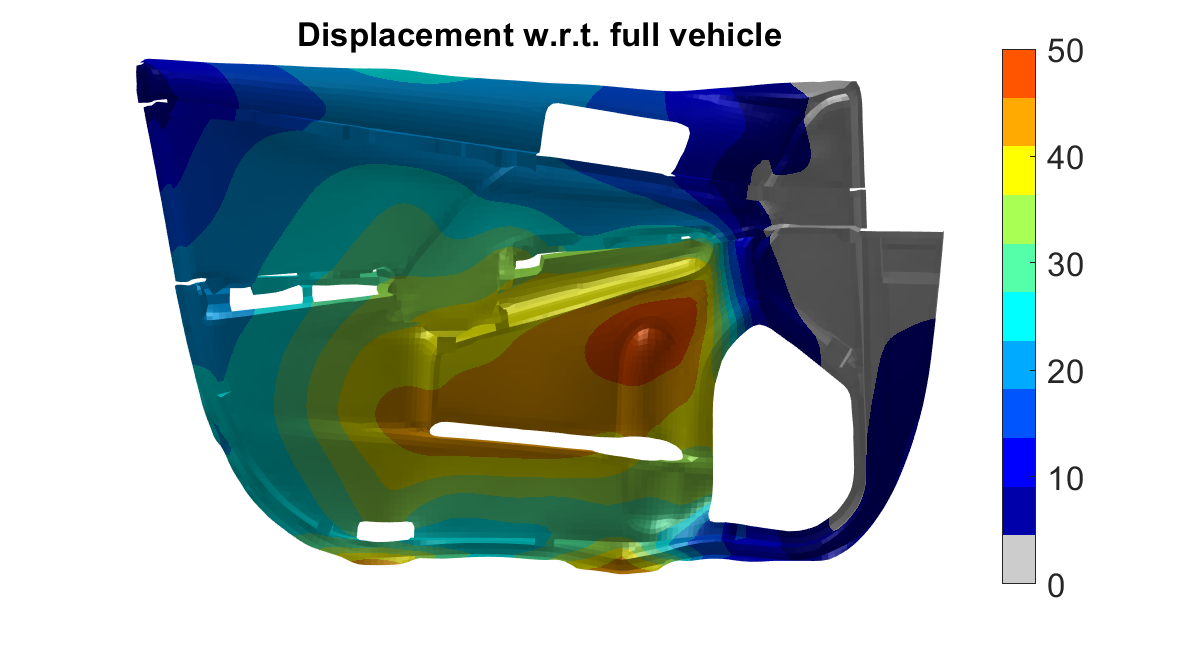 Displacement with respect to the overall vehicle for deformation assessment
Typically 3 follower nodes are used to remove rigid body motion
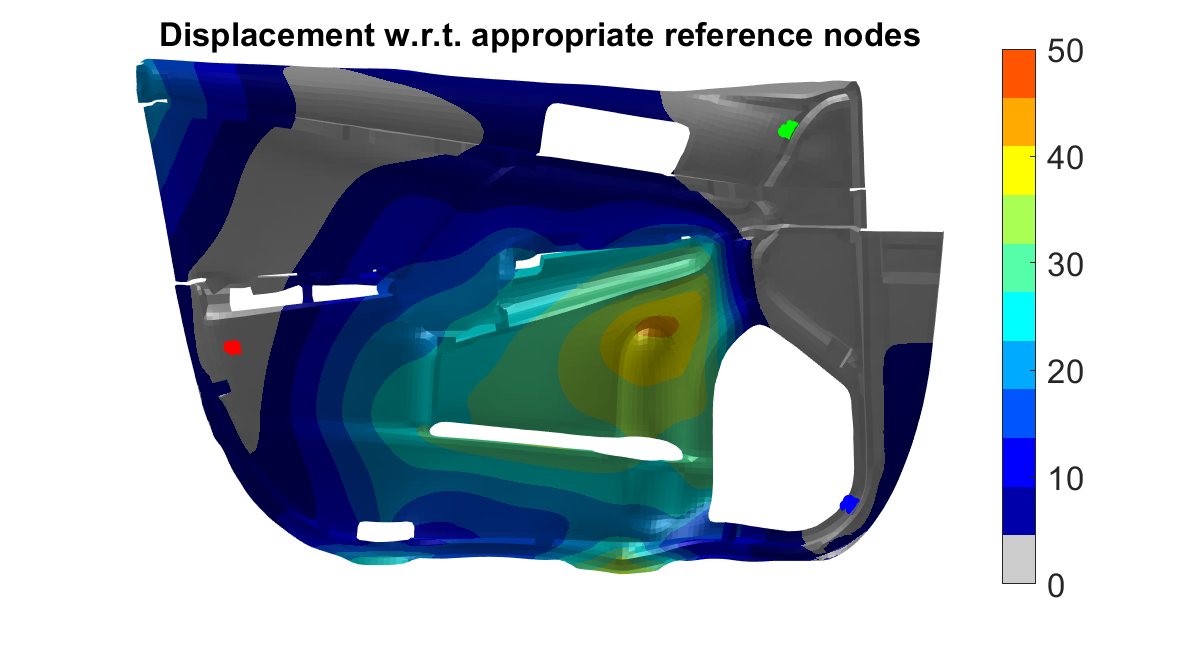 Displacement with respect to 3 appropriate reference points
the result highly depends on an appropriate choice of the follower nodes
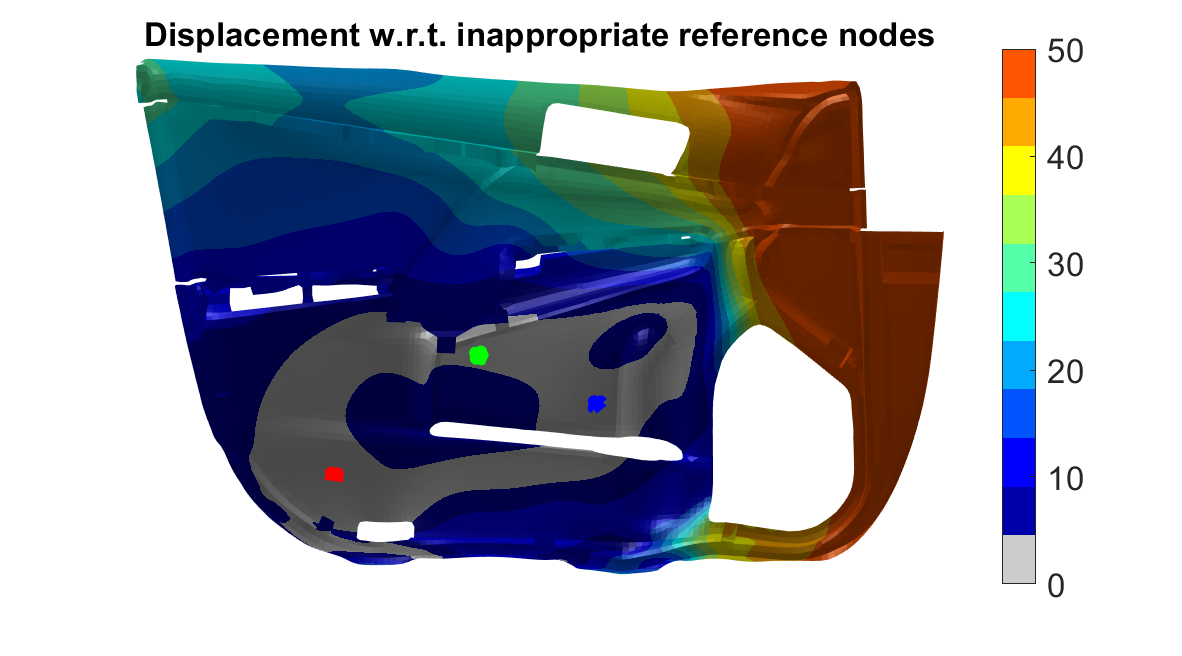 Displacement with respect to the 3 inappropriate reference points
Geometric Operations Toolbox methods removes an average translatory and rotary displacement for all nodes to asses the displacement fraction which is relevant for the deformation
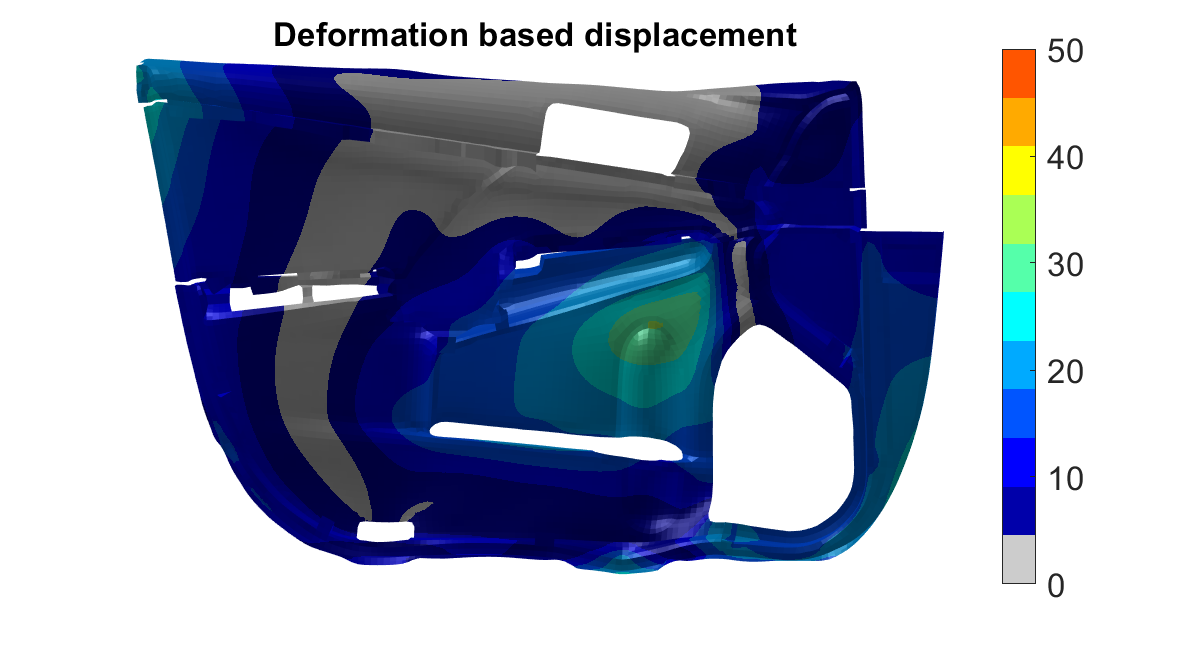 Deformation without translatory and rotary rigid body motion
Challenge
In many applications, the position of high deformation is of interest. In crash simulations the deformation relevant displacement is often superimposed by significant rigid body motion. To remove the rigid body fraction several strategies exist. Often follower nodes are used, leading to different results depending on the choice of these nodes.
Solution
The Geometric Operations Toolbox provides several methods to evaluate the rigid body motion.
- follower nodes: Use 3 nodes to form a reference coordinate system. These nodes can be chosen by the user or automatically.
- bounding box: Tracking a bounding box can be used as reference
- average nodal rigid body motion: The displacement is split into translatory and rotary components and an average value is calculated for both parts
- principle component analysis