

Establishment of Comparability
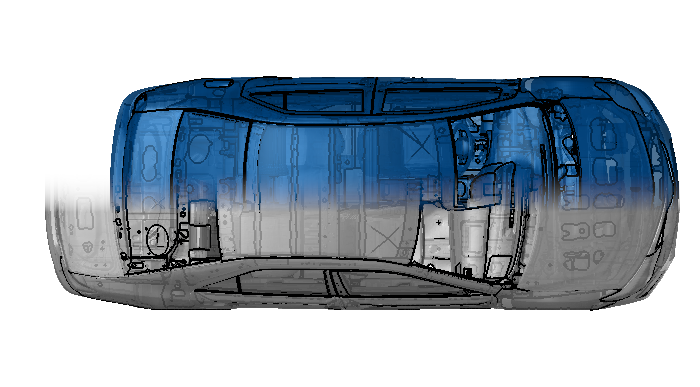 compare 2 different models
One essense of Finite Element Analysis is the assessment and comparision of different design variants. Traditionally this comaprision is tedious, when the Finite Element meshes differ significantly.
Functions of the FEM Operations Toolbox allow the comparision of many different abstraction levels.
That way different design variants can be compared easily, even components or design concepts differ significantly or changes in labels, mesh density, position, orientation, or even part geometry hinder comparability.
Changing Models
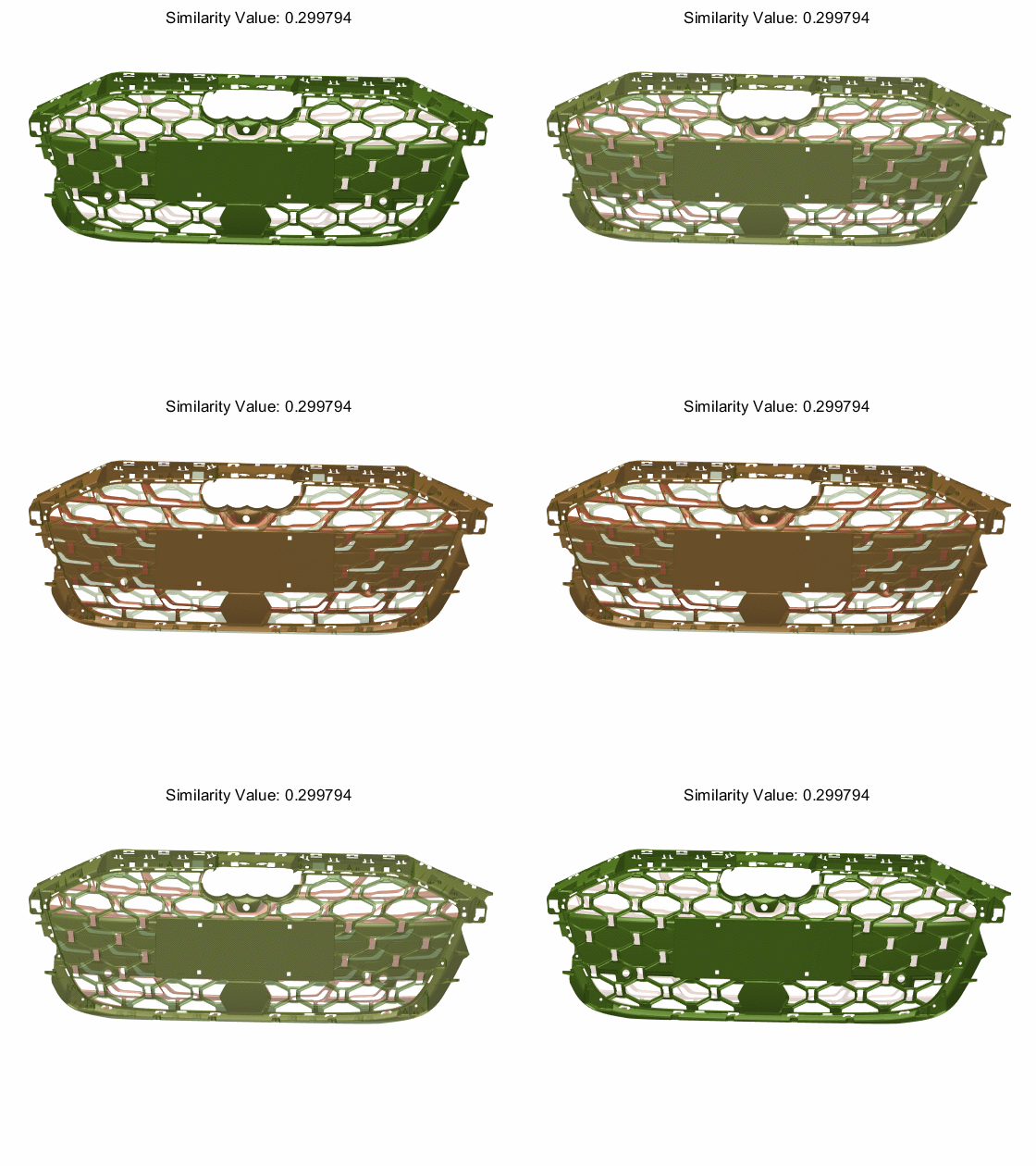
Component Re-Identification
- identify components in your simulation without manual labeling
- reidentify components in other simulations
- apply it on all shades of similarity (from perfectly equal to vaguely similar)
- use this mapping for further comparative analysis (e.g. sensitivity analysis)
Courtesy from Audi
Result Mapping
- Based on component re-identification and geometrical interpolation
- Project your results onto another model
- Compare results locally on a elementar or nodal level
- Map many simulations onto a single reference geometry
Result Aggregation
- Based on component re-identification
- Derive simple feature signals from your results from matching components or regions
- Enabler for advanced methods like machine learning on finite element models
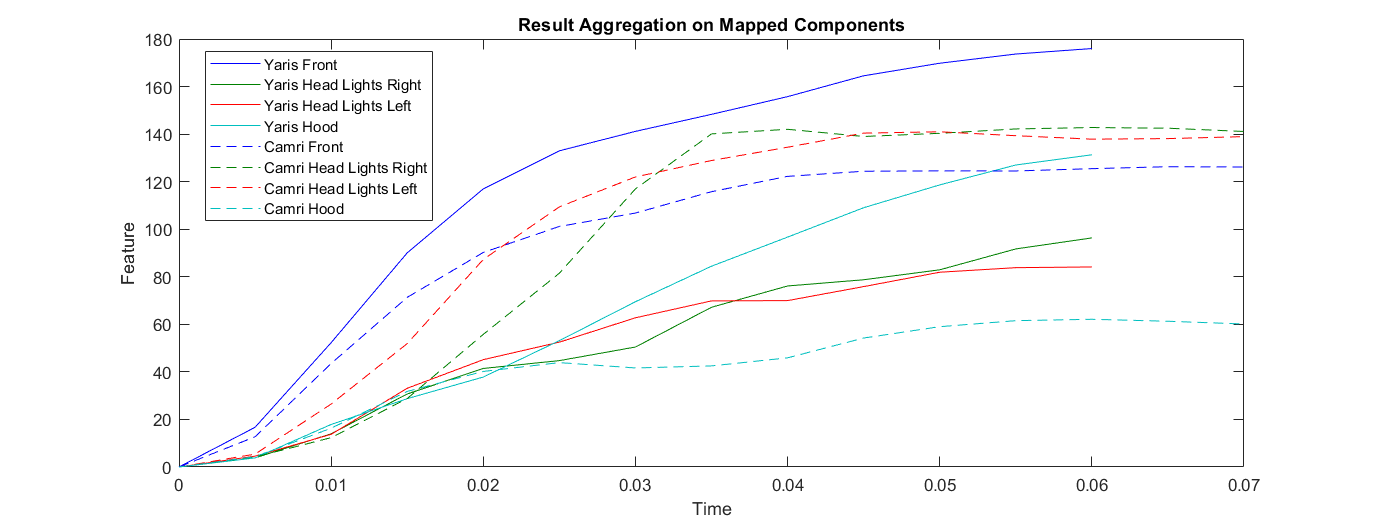 Stastical aggregation of some results for both models - original and transfered results.
Applied Methods
- Automatic part and component identification
- Results aggregation at different levels of abstraction
- Mapping and geometric normalization
Achievements
- Establish comparability of arbitrary design variants and Finite Element models
- Improved knowledge discovery from Simulation Data Management